|
|
![]() |
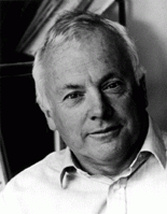
Richard Francis
E-mail: rfrancis22@hotmail.com I am a writer, academic and broadcaster. For many years I taught at Manchester University, but six years ago moved to Bath, where I'm Professor of Creative Writing at Bath Spa University College. I've published nine novels, a book on utopian thought and a biography of Ann Lee, the founder of the Shakers. A new biography, Judge Sewall's Apology, came out in hardback last year and will appear as a HarperPerennial paperback in both the USA and the UK in August 2006. Read more... Links: |
|
|
|
Judge Sewall's Apology
The Salem Witch Trials and the Forming of an American Conscience
Biography. New York and London: Fourth Estate, 2005 - hardback; New York & London: HarperPerennial, 2006 - paperback. UK editions omit the word 'American' from the subtitle! Samuel Sewall is the most vivid, rounded, human presence to have come down to us from America's early days. He kept a diary, to which he confided the details of his life, his hopes and fears, even his dreams. My biography makes use of this unique material to recreate a man whose story is public and private, comic and tragic, someone with a finger in every pie. He was a merchant, diplomat, politician, loving family man, anti-slavery agitator, advocate for the Indians, utopian theorist, poet, campaigner against the wearing of periwigs, friend and confidant of people from every section of colonial New England society, and in his later years a gallant but not always successful wooer of respectable Boston widows. He was also one of the witch judges of Salem - the only one to say sorry for what had happened. This recantation was the central event of his life and gives a shape and meaning to his story. As the drama unfolds we see a man - and his culture - on a voyage from an almost medieval view of the world towards a recognisably modern perspective. Richard Francis's own adaptation of Judge Sewall's Apology was serialised as Book of the Week on Radio 4 (August 2005). Read more... |
|
Update
The paperback of Judge Sewall's Apology comes out in both the USA and the UK in August 2006 Buy it at Amazon "A timely and disturbing book" HILARY SPURLING, DAILY TELEGRAPH "This marvellous book... Richard Francis's intelligent, funny and sympathetic biography... he creates an unforgettable human being." DAVID AARONOVICH, THE TIMES "Francis is a sensitive interpreter whose reading lends texture, color and chronology to a culture that is often reduced to monochrome caricature." SADAKAT KADRI, WASHINGTON POST Margaret Drabble's choice as book of the year in the Times Literary Supplement |
|
|
![]() |
Prospect Hill
Novel - London: Fourth Estate, 2003 Costford, 1970. Trevor Morgan is a labour councillor with magical teeth and the political flair to get to the top. But his marriage is in crisis, and he seeks help from an unexpected quarter: doughty middle-aged May Rollins, a Tory councillor living with the demented mother she has always hated. Strange things are happening to May: she sees a lollipop lady at eight o'clock on an August evening; her TV converts to colour of its own accord. She and Trevor are at odds over a controversial plan to build council flats at Prospect Hill, but their relationship nevertheless abruptly - and ambiguously - intensifies. Then we have Art Whiteside, the romantic estate agent, Wendy Hammond, who gave up teaching to become a waitress then gave up that to baby-sit her grandmother, and the silent and dangerous Fray Bentley, Town Hall bouncer and lover of Party Fours. A novel about the relationship between public and private life, about mothers, wives, lovers, houses and households. Buy it at Amazon "Francis has a fine knack of giving voice to the voiceless." ALFRED HICKLING, GUARDIAN "An extremely readable and very funny book. This is a world where everything is known, even the unexpected... it is reliable, warm, and inescapable." SEAN O'BRIEN, TIMES LITERARY SUPPLEMENT |
|
|
![]() |
Ann The Word The Story of Ann Lee, Female Messiah, Mother of the Shakers, The Woman Clothed with the Sun Biography - London: Fourth Estate, 2000 - New York: Arcade, 2001 - Penguin: New York, 2002 Ann Lee was one of the most extraordinary and mysterious women in the history of western culture - probably the most influential artisan woman since Joan of Arc. The illiterate daughter of a Manchester blacksmith, she sailed to America on the eve of the Revolution. She and her tiny band of followers settled in upstate New York where, after years of poverty and isolation, converts began flocking to their log cabin. She was arrested as a British spy and tormented by angry mobs, but nevertheless remained firm in her claim to be the messiah in female form, and began an epic journey through New England towards the spiritual home she had seen in a vision. My own adaptation of Ann the Word was serialised as Book of the Week on Radio 4 (21-25 August 2000). Buy it at Amazon "An entertaining and absorbing study... it is one of those books that is utterly interesting for its own sake. If you put it in the guest bathroom I guarantee long absences at dinner." JEANETTE WINTERSON, THE TIMES "This splendid biography of Ann Lee, one of the first Shakers, offers rational insight into the power of belief." NEW YORKER |
|
|
![]() |
Fat Hen
Novel - London: Fourth Estate, 1999; London, Fourth Estate, 2000 [pb] Like Taking Apart the Poco Poco, a novel of family life, but in this case the time-scale is eight years (1947-55) rather than a single day. In fact the story begins half a century earlier, when young Ernest Willis commits an act of betrayal which threads its way through the lives of all concerned. Now a grandfather, Ernie is obsessed by judicial executions, along with the novels of Walter Scott in which he tries to discover clues to his own life, while his daughter Rose has an experience with another woman for which she can find no words at all. Meanwhile her husband Jack lives a double life funded by a discovery made in a secondhand piano, and young Donald, their son, struggles towards adolescence, convinced he actually died at the age of six. Buy it at Amazon "Avoiding any hint of blatancy, relying on oblique dialogue and mental uncoilings, the novel works by stealth - taking some of the various obsessions on display... and using them to bring contours to an initially shapeless world." THE GUARDIAN "Richard Francis directs a deliciously askance gaze at working-class life, devising an absurdist sitcom whose hilariously inflected characterisations would knock most of the generic competition clean out of the coop." SUNDAY TIMES "A subtle, remarkable and acutely imagined novel." DAILY TELEGRAPH |
|
|
|
The Rialto
Short story - published in The City Life Book of Manchester Short Stories - Penguin: Harmondsworth, 1999 |
|
|
|
Editor:
The Claudius Novels of Robert Graves
Manchester: Carcanet, 1998 The term editor is a bit of an exaggeration, since there were no textual cruxes to iron out, and no notes to write. What I did do was provide an introductory essay exploring how Graves came to write I, Claudius and Claudius the God. |
|
|
|
Transcendental Utopias Individual and Community at Brook Farm, Fruitlands and Walden Ithaca - Cornell University Press, 1997 I explore three utopian experiments undertaken in Massachusetts in the 1840s, all of which represented attempts by a group of thinkers known as the New England Transcendentalists to reconcile the contingent world of history with what they saw as the stable structure of nature. "Francis does historians an important service by suggesting that they should move beyond such artificial dichotomies as individual versus community in their attempt to understand the complexities of transcendentalism." JOURNAL OF AMERICAN HISTORY |
|
|
![]() |
Taking Apart the Poco Poco
Novel - London: Fourth Estate, 1995 - New York: Simon & Schuster, 1995 - London: Fourth Estate, 1996 [pb] Thursday morning. Each member of the Edwards family opens the front door of their ordinary house in turn... and steps into the unknown. John finds himself facing one of the crucial decisions of his life as he lunches on crab paste sandwiches with the enigmatic Mrs Clarke, while Margaret, his wife, discovers both terror and passion at the breast clinic of the local hospital; their teenage daughter Ann experiences religious visions and sexual threats on the way to an evangelical hoe-down, and eight-year-old Stephen is deflected from his journey to school and ends up in the clutches of the unpredictable blotherin man. Only Raymond the dog has a glimmer of what is going on, and he's suffering from a romantic entanglement of his own. "Deliciously funny... The humour is quiet but my laughter wasn't." THE OBSERVER "Affectionately and acutely observant of life's fatuities and its dreadful, secret, individual fears." TIMES LITERARY SUPPLEMENT |
|
|
|
The Land Where Lost Things Go
Novel - Manchester: Carcanet Press, 1990 Olive Watson is an out-of-print writer of children's stories. In 1975, as an old woman, she sits down to write the first and only draft of her last work, The Land Where Lost Things Go. In it, we encounter three versions of the same person: a little girl living with her family in Cornwall before the first world war, a fictional child wandering through a landscape of witches and trolls, and an old lady who spies on the milkman, battles with her kitchen, and confronts her last living relative, who comes out of the lost world she has been exploring to claim her. Buy it at Carcanet "Impressive and moving . . . all the hallmarks of a Francis novel: the logical illogicality; the wealth of startling images; and comic exuberance laced with the macabre." TIMES LITERARY SUPPLEMENT |
|
|
![]() |
Revolution
Commissioned by Transworld Publishers, published under the Bantam imprint in New York (1986) and London (1987), and in Paris by Editions J'ai Lu (1987) Book of the film directed by Hugh Hudson and starring Al Pacino, Donald Sutherland and Nastassja Kinski. Screenplay by Robert Dillon. The film was hugely over-budget and bombed. I had to take notes while sitting in Hugh Hudson's office watching an advance screening. There was an air of doom hanging over him while I did so. But the novel, set in the American War of Independence, was fun to write, and the written word being what it is I didn't have the problem of pretending that East Anglia was New York State. |
|
|
![]() |
Swansong
Novel - London: Collins, 1986; New York: Atheneum, 1986; London: Fontana Flamingo, 1987 This novel (I wanted to call it Songs for Yomping but was pevented by the publishers) ranges freely over eighties Britain, from raucous self-loathing punk rocker Premo Bulge, to Jack and Queen, an elderly Battersea couple involved in the bacon and greengrocery trades, and their unexpected connection to the Prime Minister, Mrs Cheeseman, with her mysterious pearl earrings. The Third Sex is at last revealed; an eighteenth century rake finds himself in a twentieth century war; a clergyman has a life-changing vision of his own tooth – and everything and everybody inevitably triangulates towards the Farquhar Islands, where the locals have bobble hats and priapic teapots, and British culture finally sinks beneath the waves. "I would like to go on and on about how brilliantly funny and inventive and intensely enjoyable and, well, just how brilliant it is." DAILY TELEGRAPH "Exuberant and richly imaginative, bursting at the seams." SUNDAY TIMES |
|
|
![]() |
The Whispering Gallery
Novel - London: Andre Deutsch, 1984 - New York: W.W. Norton, 1984 - London: Corgi Black Swan, 1985 [pb] Space shuttle astronauts whirl away into the cosmos, only able to tune into Radio 3, a heart surgeon gets blown up in a Manchester restaurant, there's a road accident that won't stop happening, a nightmarish dinner party in Antarctica, a tiny protozoan that could transform the economy or destroy the world. The people, situations, and events of this novel are as ill-assorted, surreal and extreme as today's news, yet somehow they are all connected by the Fat Man, a large figure nobody seems to notice. Perhaps what you read in the newspapers is true after all... "Part thriller, part strip cartoon, part black pantomime, the novel leaves an agreeably bitter taste in the mouth." TIMES LITERARY SUPPLEMENT "A statement of our times ... the book is beautifully written ... This is a piece of work that should not be missed." NEW YORK TIMES |
|
|
|
Bingo
TV play Commissioned by Granada Television, broadcast nationally on the ITV network on May 23rd 1983. Starred Gwen Taylor and Benjamin Whitrow. Audience Research estimate of eight million viewers. The story of a middle-class woman who lives a double life as a bingo player. |
|
|
|
The Enormous Dwarf
Novel - London: Granada, 1982 A book about the ultimate loss, and the only task that remains after it has been suffered: to find out how and why it happened, to reconstruct the event. This is a detective story about the act of detection itself, and the motive behind it, about our need to retrace our history so that we can find ways of living with it. |
|
|
![]() |
Daggerman
Novel - London: Faber, 1980 - London: Panther, 1981 [pb] - New York: Pantheon, 1982 - New York: Avon, 1983 [pb] - Tokyo: Hayakawa Novels, 1983 Turner is luckless: run over by the school lawn mower; shooting a cow with a pencil that has his name carved on it; disgracing himself at Suez; losing his job. Finally it is all too much. He makes himself a knife; fashions a leatherette jerkin with DAGGERMAN in studs on the back; contrives a new religion of the Third Alternative in which he has the starring role; and embarks on his career as a psychopathic killer. "Original blend of the macabre and the comic." TIMES LITERARY SUPPLEMENT "An expert piece of work, written in polished prose." NEW YORK TIMES |
|
|
![]() |
Blackpool Vanishes
Novel - London: Faber, 1979 - London: Panther, 1980 [pb] - London: Fontana Flamingo, 1988 [pb] Blackpool has been visited for years by tiny beings in flying saucers so small they are mistaken for spots before the eyes, invaders from inner rather than outer space. Only one local resident realises what's going on and his reports, couched in verse, are not taken seriously by the Alien Beings Section of the Foreign Office until too late, when the whole resort is suddenly whisked away. "Logic is stood on its head in the tradition of Swift." FINANCIAL TIMES "This is mainstream literature ... A smooth blend of satire, poetry and real imagination." TIME OUT |
|
|